Ship Burials in the Norse World: Elite Graves and Symbolic Passage
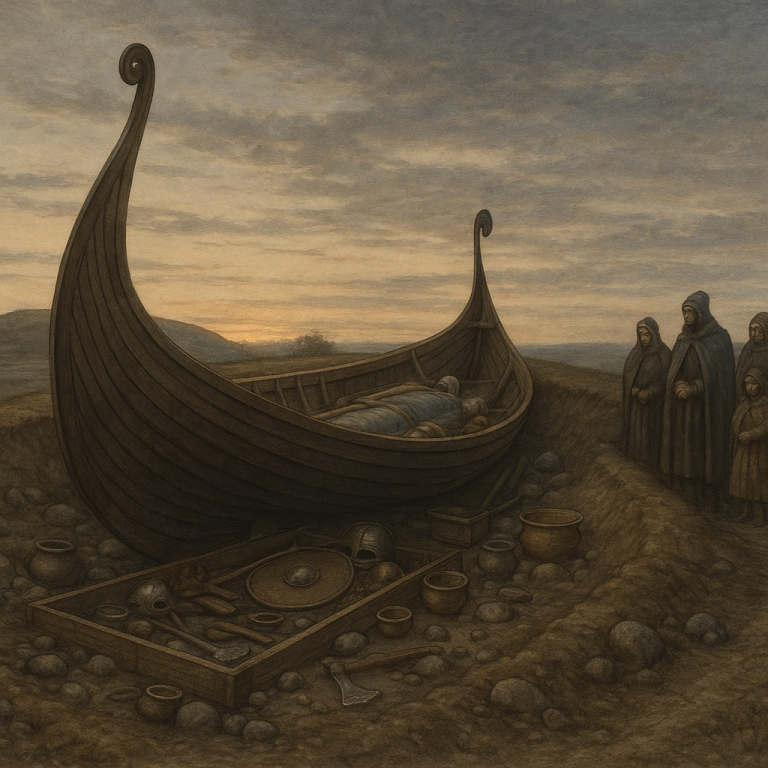
Ship burials are among the most striking burial customs associated with the Norse world. They combine elite display, maritime identity, and ideas about the dead’s passage beyond...
Echoes of the Old Gods
Echoes of the Old Gods

Ship burials are among the most striking burial customs associated with the Norse world. They combine elite display, maritime identity, and ideas about the dead’s passage beyond...
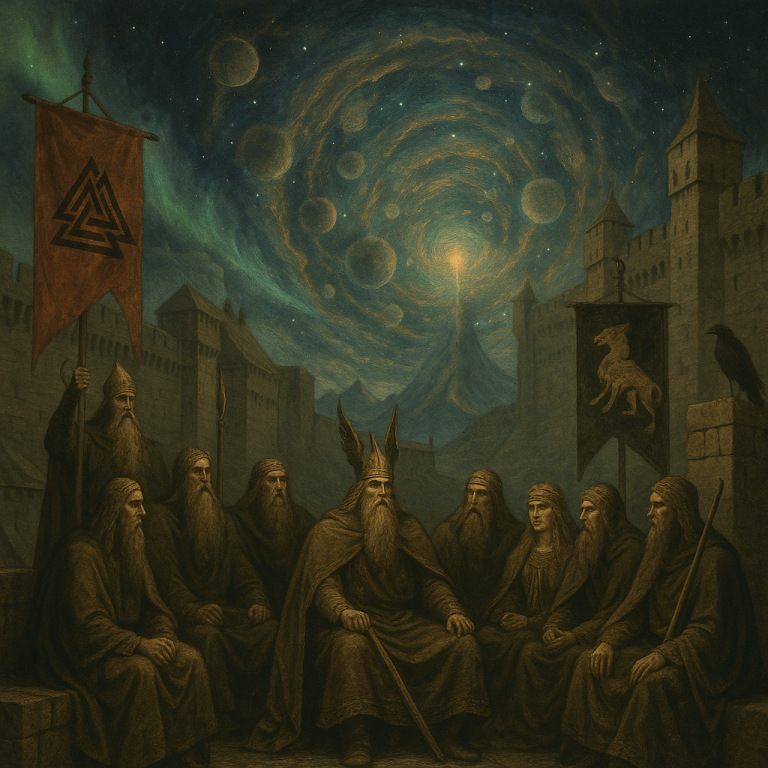
Asgard is more than the home of the Aesir: in Norse myth, it can be read as a center of divine authority, social order, and conflict within Norse cosmology.
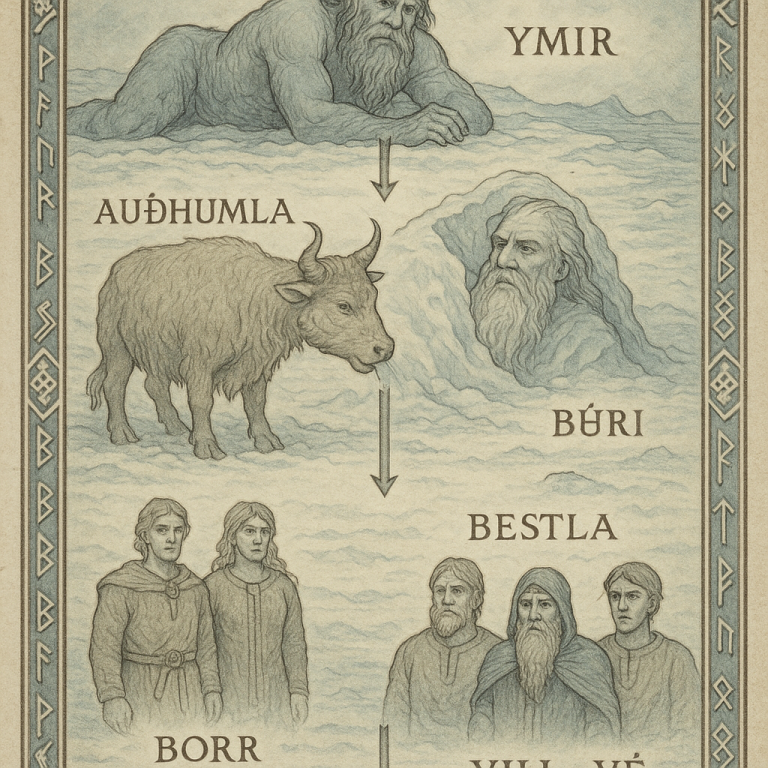
In Old Norse creation myth, genealogy is not a side detail: it is the architecture of the cosmos. From Ymir’s body to Búri, Borr, and the first generation of gods, kinship...
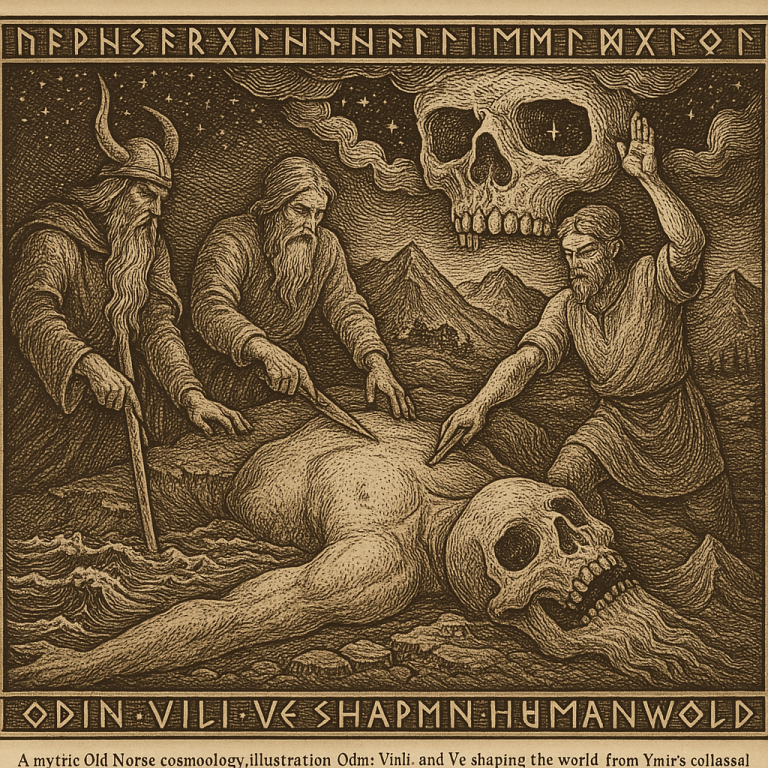
In Old Norse cosmology, creation begins not with gentle ordering but with a violent transformation of the primeval giant Ymir. This article traces how Odin, Vili, and Vé fashion...
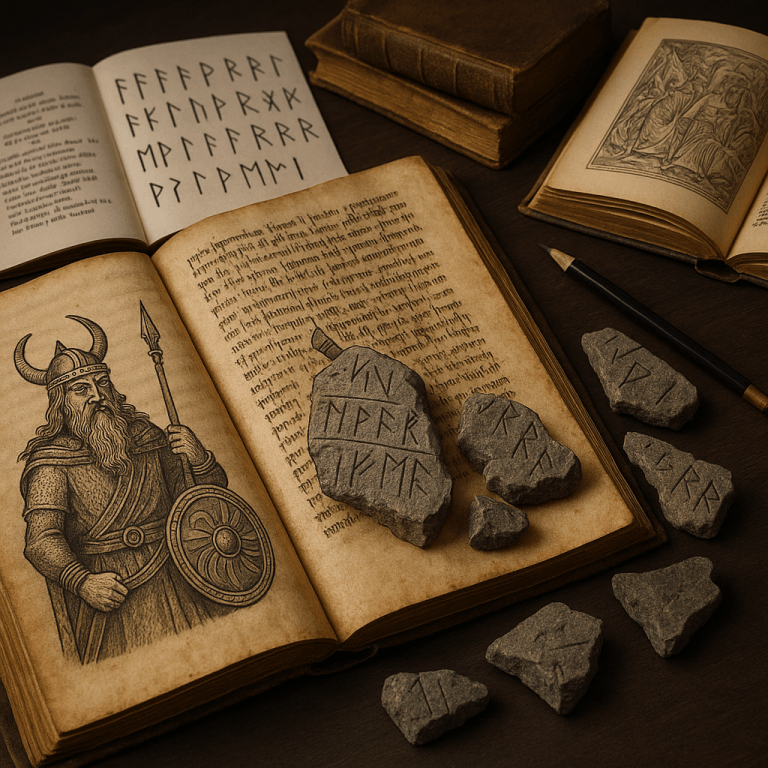
How do scholars reconstruct Old Norse myth when the evidence survives only in fragments? This article explains how researchers compare Edda manuscripts, saga literature, runic...
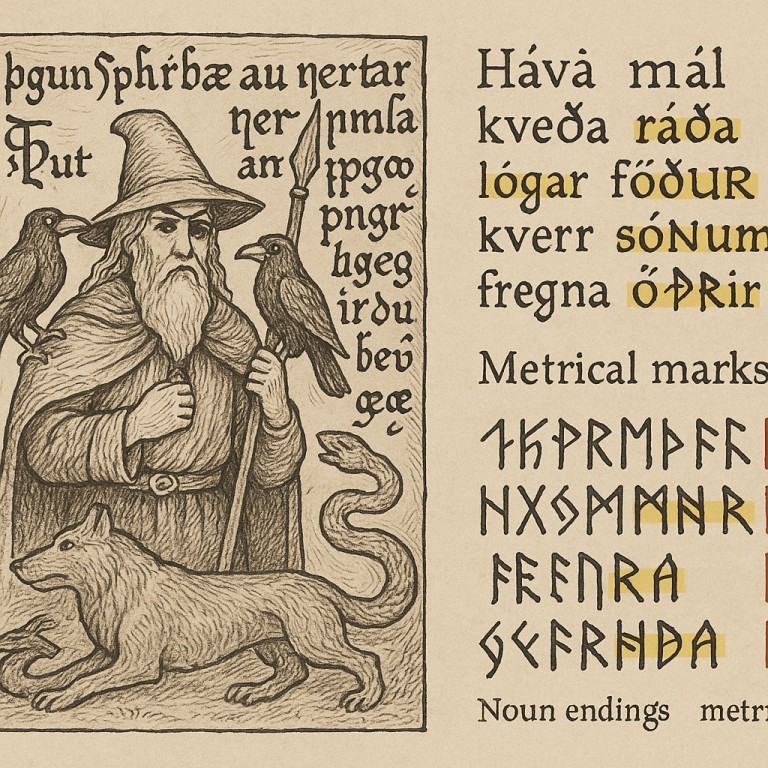
Old Norse Eddic poetry is not just myth in verse; it is grammar under pressure. This article explains how noun case endings interact with meter, alliteration, and formulaic...
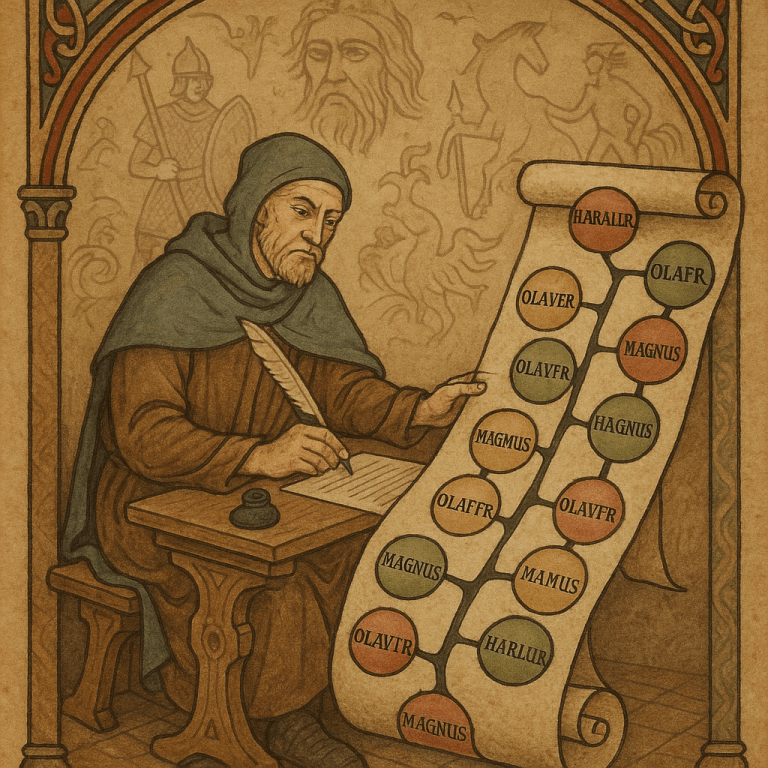
Snorri Sturluson’s Heimskringla is more than a kings’ saga collection. It presents the rulers of Norway through genealogy, mythic ancestry, and saga narrative, shaping royal...
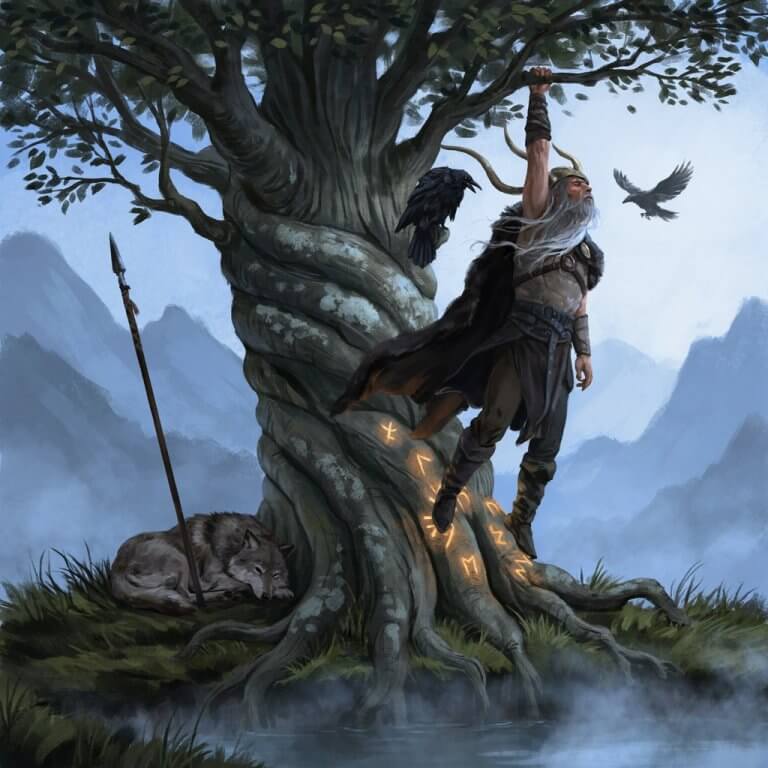
Odin’s quest for the runes is a major expression of wisdom in Norse myth: knowledge is not freely given, but won through ordeal, self-denial, and contact with dangerous powers...
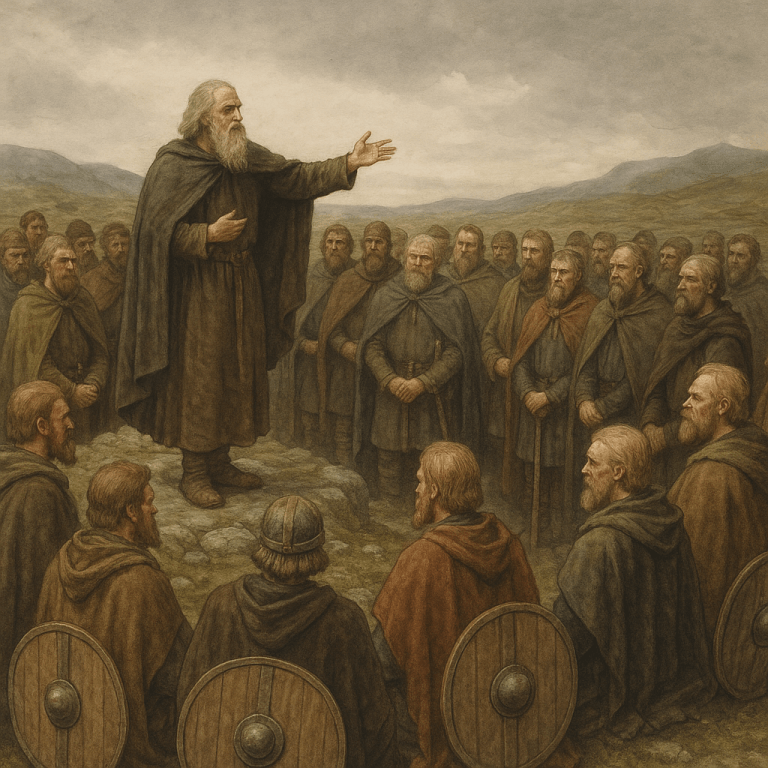
The Norse þing was more than a court. It was a public assembly where free men gathered to settle disputes, hear law, take oaths, and shape community order. This article examines how thing assemblies worked as legal and political institutions in ancient Norse society, and why they mattered in historical practice and cultural memory.
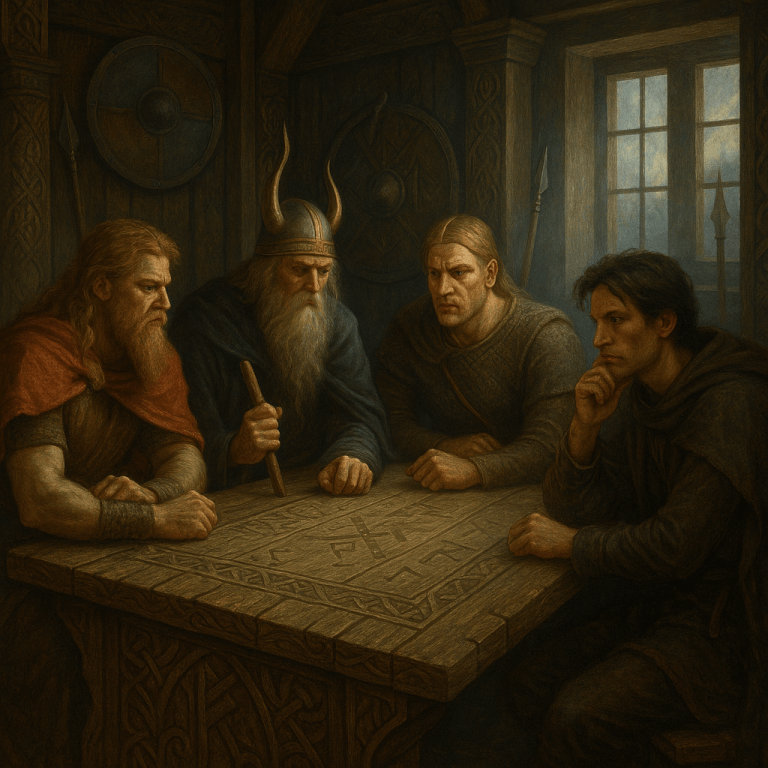
The Aesir are often remembered as individual gods with famous powers, but Norse myth also presents them as a ruling order. Their world is shaped by leadership, negotiation, loyalty, rivalry, and the fragile bonds of oath and kinship. Looking at the Aesir politically reveals a divine society held together by alliance as much as by force.