
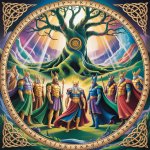
The Aesir Gods: Rulers and Warriors of Norse Mythology

Introduction to the Aesir
In the fascinating pantheon of Norse mythology, the Aesir gods stand as the primary group of deities, epitomizing power, war, and governance. Residing in Asgard, one of the Nine Worlds mounted on the cosmic tree Yggdrasil, these gods are central figures in the mythic narratives recorded in the ancient Norse texts. The Aesir are best known from the Icelandic sagas and the Poetic Edda and Prose Edda, composed in the 13th century but based on older traditional material. These texts provide us with rich details about the divine hierarchy, the conflicts, and the cosmological beliefs of the Norse culture.
Key Figures Among the Aesir
The Aesir pantheon is populated by gods and goddesses, each with unique attributes and realms of influence. The foremost among them is Odin, the Allfather, who rules over Asgard and is associated with wisdom, war, and death. His wife, Frigg, is the queen of Asgard and a figure of foreknowledge and wisdom.
Odin – The Allfather
Odin’s presence dominates Norse mythology. Described as a relentless seeker of knowledge, he sacrificed one of his eyes at Mimir’s well to gain cosmic wisdom. Odin also presides over the valiant dead in Valhalla, where warriors slain in battle are gathered, hoping to aid him during Ragnarök, the prophesied end of the world.
Thor – God of Thunder
Thor, perhaps the most well-known of the Aesir due to his modern pop culture incarnations, is the god of thunder, lightning, and storms, and also of strength and protection. Wielding Mjölnir, a magical hammer, Thor is the defender of both Asgard and Midgard (Earth), governing agricultural blessings and sanctity.
Loki – The Trickster God
Loki, though often considered one of the Aesir, is actually of the race of giants or Jotnar; however, he lives among the Aesir by right of being Odin’s blood brother. Known for his cunning and deception, Loki’s antics and mischief cause both harm and good to the gods, ultimately leading to his punishment until Ragnarök.
Other Prominent Aesir
The Aesir clan includes numerous other significant deities such as Balder, the god of beauty and purity; Tyr, the god of war and justice; Heimdall, the watchman of the gods who guards Bifrost, the bridge to Asgard; and many others. Each deity has a plethora of stories that explore their powers, their interactions with other gods, and their roles within the structure of Norse cosmology.
Roles and Responsibilities
The gods of Asgard carry out specific roles that reflect their areas of power and governance. From overseeing various aspects of the natural world to the enforcement of law and order in the divine realm, these deities embody a functional pantheon where each member has a detailed mythological biography that impacts the human and divine worlds.
Maintaining Order and Society
Oversight of law and societal order is a crucial aspect of the Aesir’s role. For instance, Odin often seeks the council of the wisest among the gods and human dead, planning for the future and maintaining cosmic balance. Frigg, as another example, intervenes in the affairs of mortals, ensuring that social order is preserved.
War and Conflict
The Aesir are also deeply connected with the aspects of war. Odin and Thor, in particular, symbolize the warrior ethos that was highly revered in Norse society. The preparation for Ragnarok, a central event in Norse mythology that involves the final battle against chaos and evil, is a recurrent theme in the myths associated with the Aesir.
Ragnarok: The Twilight of the Gods
Ragnarok represents the cyclical nature of Norse mythology, where creation is followed by destruction, only to lead to rebirth. For the Aesir, this cataclysmic event is the ultimate test of their power and resolve. During Ragnarok, many of the Aesir, including Odin and Thor, are foretold to fall in battle against the giants and other monstrous creatures before the world is reborn anew.
Worship and Cultural Impact
Worship of the Aesir reflected the values and beliefs of the Norse people. Rituals and ceremonies, often led by tribal chiefs or religious figures known as goði, included offerings and feasts held to honor the gods and ensure divine favor. These practices underscored the symbiotic relationship between the divine and the mortal realms.
Conclusion
The Aesir gods of Norse mythology present a dynamic and influential cadre of deities whose tales have been told and retold through centuries. From the mighty Thor, harnessing the storms, to the wise Odin, overseeing the cosmic balance and seeking knowledge, the Aesir continue to captivate the imagination and inspire exploration into Norse cultural heritage and its underlying mythological ethos. The rich tapestry of stories in which they are woven serves not only as entertainment but also as a window into the worldview of the ancient Norsemen, with relevance even in modern cultural contexts.