
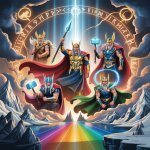
The Aesir: A Pantheon of Power and Intrigue in Norse Mythology

Introduction to the Aesir
The Norse gods, known collectively as the Æsir, constitute a formidable group of deities, heroes, and mythical beings that command the realms of war, wisdom, and the elements in Norse mythology. Revered across Scandinavian landscapes, their tales resonate through sagas and poems that fuse mythology with historical experiences. This rich tapestry of narratives not only defined the religious practices of the Norse but also their understanding of the world and the forces at play within it.
The Pantheon of the Aesir
Central to Norse cosmology are the gods and goddesses who reside in Asgard, one of the nine worlds and the celestial fortress of the Aesir. This divine group is often portrayed in stark contrast to their counterparts, the Vanir, who are associated with fertility, wisdom, and the ability to see the future. The Aesir, however, are distinguished by their connection to power, war, and governance. The most renowned among them include Odin, Thor, and Frigg, each exemplifying unique aspects of sovereignty and strength.
Odin: The All-Father
At the apex of their hierarchical structure sits Odin, the All-Father, a god of war and wisdom. Odin’s quest for knowledge is legendary, driven by an insatiable appetite for understanding the runes, the cosmos, and the fateful secrets they hold. He is said to have sacrificed his eye at Mimir’s well to gain cosmic insight, a testament to his unyielding pursuit of wisdom. Besides his scholarly endeavors, Odin is also a fierce warrior, often depicted with his two ravens, Huginn and Muninn, who fly across the world to bring information back to their master.
Thor: God of Thunder
Thor, perhaps the most popular of the Aesir due to his uncomplicated nature and heroic feats, is the god of thunder, lightning, and strength. He is robust and straightforward, wielding his mighty hammer, Mjölnir, with which he battles the giants, protectors of chaos and natural forces antagonistic to the order of Asgard. Thor’s role as a defender of Asgard and Midgard (the realm of humans) is crucial in maintaining the cosmos’ balance against the forces of chaos.
Frigg: The Queen of Asgard
Frigg, the wife of Odin, is the quintessential embodiment of sovereignty and foreknowledge among the Aesir. She is associated with prophecy, marriage, and childbirth, weaving the fates of men and gods alike. Frigg is portrayed as a figure of high standing and respect within Asgard, often involved in the governance of the realm alongside Odin.
Mythological Narratives and Beliefs
The myths surrounding the Aesir are not merely stories but are deeply intertwined with the Norse understanding of the world and their place within it. The creation myth, in particular, reveals much about their worldview; it tells of a cosmos borne out of chaos, with the giant Ymir forming the world from his body parts, slain by Odin and his brothers. This violent origin story sets the stage for a world where survival is contingent upon strength, wisdom, and cunning.
The Role of Ragnarök
The prophetic doom of the gods, or Ragnarök, is a pivotal element of Aesir mythology. This apocalyptic series of events includes battles that lead to the death of major gods like Thor, Odin, and Loki. Ragnarök encapsulates the cyclical nature of Norse mythology, where the world is continuously destroyed and reborn. This concept profoundly impacts the Norse ethos, highlighting values such as bravery and resilience in the face of inevitable demise and the relentless passage of time.
Cultural and Historical Context
The worship of the Aesir was not confined to mythic texts; it permeated daily life and royal politics in the Norse world. Leaders would often claim descent from the gods, particularly from warlords like Odin, to justify their rule and inspire loyalty among their subjects. Practices such as blót (sacrificial rituals) underscored the relationship between the Aesir and the Norse people, rooted in reciprocity and mutual respect.
However, with the advent of Christianity around the 11th century, the Norse began to convert, and the old beliefs of the Æsir were supplanted or melded into new religious traditions. Sites once holy to the Norse gods were repurposed for Christian worship, and narratives of the old gods were preserved in texts like the Prose Edda and the Poetic Edda, written in Iceland during the 13th century.
Conclusion
The Aesir gods of Norse mythology represent a dynamic and powerful force that not only ruled over the ancient Norse cosmos but also deeply influenced the culture and perceptions of the Scandinavian peoples. Their stories, from the grand cosmological narratives to the intimate tales of divine interactions, offer us a window into the spiritual life of the Vikings and continue to intrigue and inspire minds to this day.
By exploring the vast and intricate world of the Aesir, we glean insights into ancient beliefs that transcended mere myth, creating a worldview rich with meaning, challenges, and the stark beauty of the Nordic landscapes. The legacy of the Aesir, with their complex personalities and dramatic destinies, remains a powerful reminder of the richness of human imagination and the enduring quest to understand the divine.