Exploring the Role of Animals in Norse Mythology: Significance Beyond Companionship
In Norse mythology, animals are far more than companions. They serve as powerful symbols and central figures in cosmic events, divine journeys, and the Norse understanding of the natural and supernatural worlds.

The Sacred and Symbolic Roles of Animals in Norse Mythology
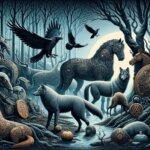
In the rich tradition of Norse mythology, animals are not merely companions; they are pivotal characters, symbols, and bearers of deep spiritual and cultural meaning. The Norse mythos, filled with gods, giants, and legendary heroes, also gives animals important roles that blur the boundaries between the natural and supernatural realms. Exploring these animal figures reveals their significance beyond companionship and shows how deeply they are woven into cosmic events, divine endeavors, and everyday Norse life.
The Divine Steeds: Horses in Norse Mythology
Horses held a prominent place in Norse culture and mythology, symbolizing nobility, speed, and passage between worlds. Odin’s steed, Sleipnir, is perhaps the most iconic example. Sleipnir, an eight-legged horse born of the god Loki, who transformed into a mare in a tale of shapeshifting and deception, and the giant stallion Svadilfari, represents more than swiftness and strength. Often depicted in ancient carvings and texts, Sleipnir carried Odin not only across the earth but also through spiritual realms, embodying the connection between life and death, the known and the unknown.
Other notable horses, such as Skinfaxi and Hrimfaxi, who pull the chariots of day and night, further show how deeply horses were woven into cosmic order and daily life in Norse cosmology. They signify not only the passage of time but also divine control over it, reinforcing the Norse view of an interconnected universe.
The Ravens of Odin: Huginn and Muninn
Among Odin’s spiritual companions, his ravens Huginn (thought) and Muninn (memory) serve as his eyes and ears throughout the worlds. Every dawn, they fly across the world and return at dusk to tell him what they have seen and heard. Their symbolism is powerful: these birds represent not only Odin’s wisdom and knowledge but also the Norse value placed on intelligence, awareness, and remembrance. Their presence reflects a worldview that honors mindful watchfulness and the lessons of history.
The Fierce Companions: Wolves and Their Dual Roles
The wolf is another recurring figure in Norse mythology, embodying both nurturing and destruction—an animal revered and feared in equal measure. Odin is accompanied by two wolves, Geri and Freki, who share his meals and fight fiercely for him in battle. This relationship underscores themes of loyalty and the high regard for camaraderie and protection.
Yet the darker side of the wolf appears in Fenrir, the monstrous wolf destined to break free at Ragnarok and devour Odin. Fenrir’s story is a complex narrative about power, fear, fate, and the uneasy balance between civilization and wildness. This dual role of the wolf as both protector and destroyer reflects the Norse perception of the natural world’s inherent ambivalence.
The Mischievous Shapeshifter: Loki and His Animal Forms
Loki, the trickster god, is central to Norse mythology not only for his cunning mind but also for his ability to change shape, often into animals. His transformations, including a mare, a salmon, and even a fly, are pivotal in many myths, allowing him to manipulate events, escape difficult situations, or cause mayhem. These shifts highlight themes of adaptability, transformation, and the blurred lines between human and animal, divinity and mortality.
Symbolic Creatures: Serpents and Dragons
Serpents and dragons in Norse mythology often symbolize danger, chaos, and destruction, yet they remain central to the mythological narrative. Jormungandr, the Midgard Serpent, encircles the earth, biting its own tail and playing a critical role in maintaining the world’s balance. His eventual release and battle with Thor during Ragnarok emphasize themes of cyclicality, inevitable conflict, and rebirth. Similarly, dragons, often depicted guarding treasures, challenge heroes and test their valor, framing the classic struggle between good and evil.
The Connected Realms: A Broader Perspective on Norse Animals
The animals of Norse mythology, with their layered symbolism and essential roles, reflect a worldview in which the natural and supernatural, the mundane and the divine, are inseparably linked. These creatures were not merely beasts to the Norse; they were central to understanding Norse culture, its environment, and its existential questions. From Odin’s wise ravens and loyal wolves to the fearsome dragons and serpents that embody cosmic chaos, each animal carries narrative depth and symbolic weight.
Conclusion
The roles of animals in Norse mythology go far beyond simple companionship, expressing deeper philosophical, cosmological, and cultural beliefs. These myths offer a window into the Norse psyche, revealing a complex relationship between humans and the natural world, one grounded in respect, reverence, and sometimes fear. Exploring these stories not only enriches our understanding of Norse mythology but also sheds light on ecology, ethics, and the human condition as understood by the Norse peoples.
Norse mythology remains a vivid and dynamic field for exploring how ancient societies understood and incorporated the animal kingdom into their sacred stories, and how those stories continue to shape contemporary perspectives on nature and our place within it.