Norse Art & Symbolism: A Tapestry of Myth and Culture

The Essence of Norse Artistry
Norse art, an integral part of ancient Scandinavian culture, held a mirror to the society’s beliefs, values, and stories. From the rugged shores of Norway to the mystical landscapes of Iceland, the Norse people developed a distinctive artistic style. This style not only decorated their world but also served as a profound means of communication. Embedding myth, legend, and daily life into their art, the Norse created a visual lexicon that remains influential and admired to this day.
Characterized primarily by its ornamental and symbolic nature, Norse art is best known from the Viking Age, approximately from the late 8th century to the early 11th century. However, its roots trace back further into the Germanic Iron age, evolving uniquely in response to their spiritual and environmental demands.
Periods and Styles of Norse Art
Norse art is traditionally divided into distinct styles, each corresponding to different periods in the Viking Age. These styles are identified mainly through the art and artifacts left behind, including jewelry, weapons, runestones, and wood carvings.
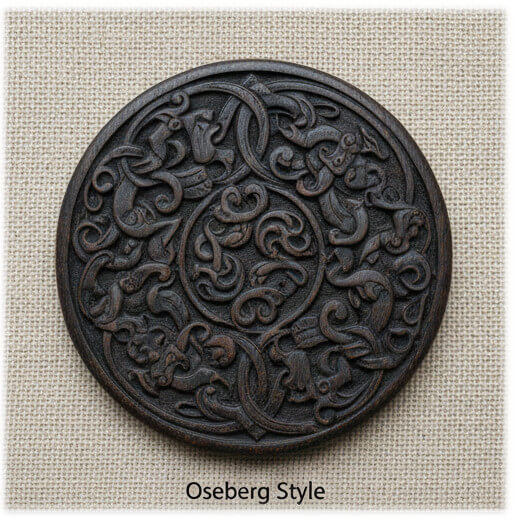
The Oseberg Style
Kicking off in the late 8th century, the Oseberg style is named after the famously ornate Oseberg ship discovered in Norway. This style features tight, intricate patterning, with gripping beasts and interlaced tendrils that seem to almost writhe and twist across surfaces.
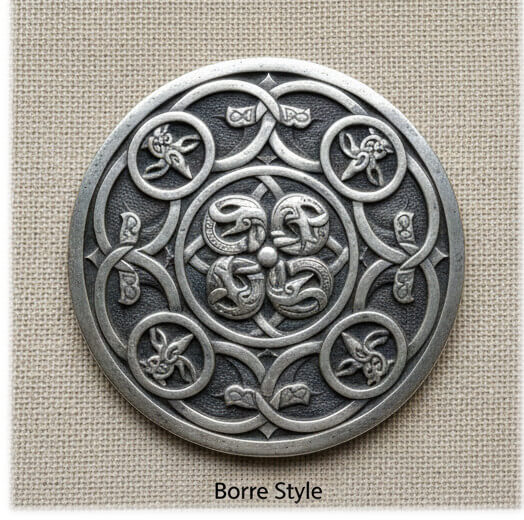
The Borre Style
Emerging in the late 9th century, the Borre style signifies a departure from the chaotic tendrils of Oseberg and moves towards symmetry and order. It is known for its gripping beast motifs and circular patterns that dominate much of the Viking artistic output of this time.
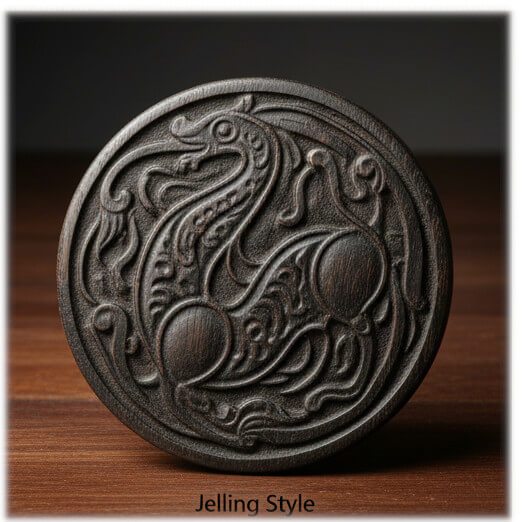
The Jelling Style
Borne out of the mid-10th century, the Jelling style introduces a more refined beast motif and is clearer and less riddled than its predecessors, showcasing the evolution and refinement in Nordic artistic tastes and techniques.
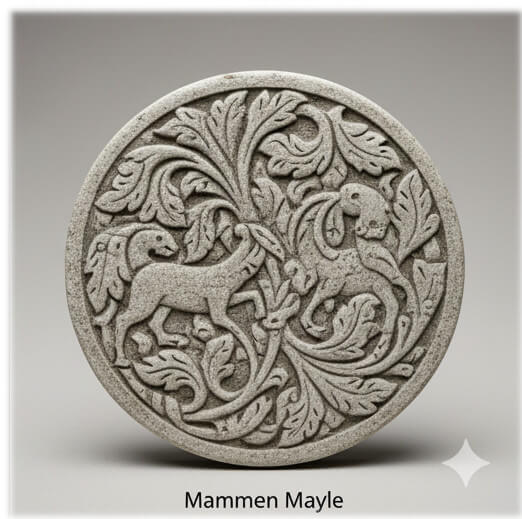
The Mammen Style
The Mammen style, flourishing in the late 10th century, blends the intricate animal designs of earlier periods with lush foliage patterns, perhaps reflecting a greater interaction with the outside world as Viking raiders turned more to trade and settlement.
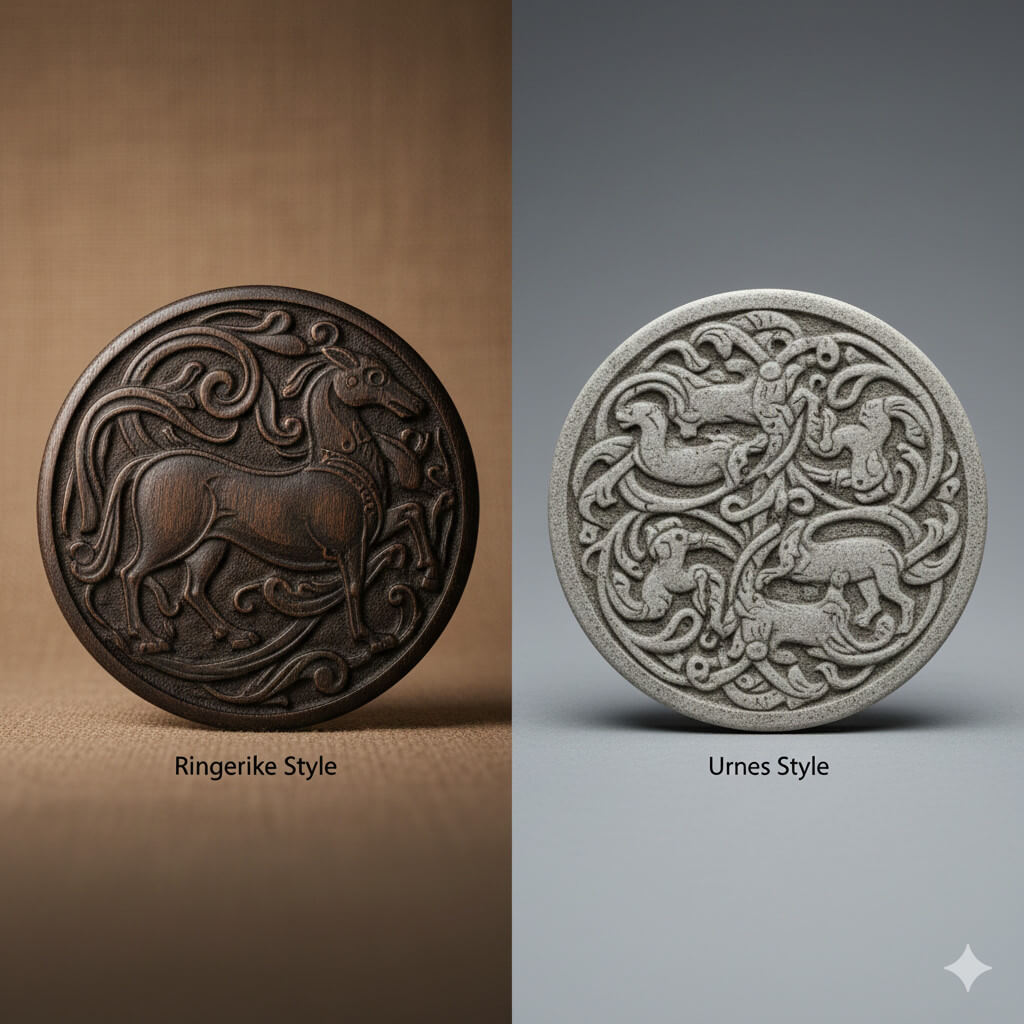
The Ringerike and Urnes Styles
The 11th century rang in the Ringerike style, noted for its graceful, curvilinear animal forms and tendrils, escalating into the Urnes style, a masterpiece of sophistication. The Urnes style represents the culmination of Norse artistic development, characterized by slim, stylized animals interwoven with tight lattice work, showing a sublime interplay of figure and background.
Symbolism in Norse Art
Norse artwork was never purely decorative, each motif laden with meaning. Artists drew upon a rich mythological framework to convey spiritual beliefs, societal values, and personal protection through their creations.
Animals and Mythical Creatures
Common among the Norse symbols were various animals and mythical creatures, each representing different aspects of life and cosmos. For instance, dragons and serpents, often used in the prow of Viking ships, symbolized power and protection. The eagle, representing wisdom and nobility, commonly appears in Norse jewelry, whereas the raven, associated with the god Odin, symbolized intellect and foresight.
Valknut and Triquetra
The Valknut, a symbol consisting of three interlocked triangles, is often interpreted as representing the afterlife, and is closely associated with Odin. The Triquetra, or the trinity knot, predates the Viking age, symbolizing concepts rooted in the number three, which might be the aspects of old Norse cosmology—perhaps the nine worlds divided into three groups, or the, body, soul, and spirit.
Runic Inscriptions
Not all Norse art can be separated from text — runes often accompanied imagery, providing context and intention. These inscriptions, whether on memorial stones or on everyday items, encompassed everything from magic to curses, from prayers to everyday jokes, evincing a culture deeply enamored with the power of the word.
Impact and Legacy
The echoes of Norse art have transcended centuries, profoundly influencing aesthetic currents and visual cultures far beyond their Nordic origins. From modern fantasy literature and television, such as ‘Game of Thrones’, to video games and contemporary fashion, the tendrils of Norse symbolism continue to entwine themselves in global narratives, underscoring the timeless appeal and profound impact of these ancient artisans.
In academia, art, and modern heathenry, Norse symbolism serves as a bridge to the past, offering insights into the mindset of the Vikings and their worldviews. By studying these symbols, not only do we gain aesthetic pleasure, but we also continue an age-old human endeavor — the quest to understand our ancestors and by extension, ourselves.