Yggdrasil & The Nine Worlds: A Cosmic Backbone of Norse Mythology

Introduction to Yggdrasil and the Nine Worlds
In the intricate tapestry of Norse mythology, central to its cosmos is the great ash tree, Yggdrasil, a pivotal symbol representing life, connectivity, and the universe’s structure. This immense tree supports not just the sky and earth but also shelters the Nine Worlds, each abode of various beings—from gods and giants to humans and the dead. The portrayal of Yggdrasil and the Nine Worlds reflects the worldview of the Norse people; intertwined, interdependent, and rich with the mystical aura of Norse cosmology. This blog post delves into the depths of Yggdrasil’s roots and explores the distinctive characteristics of each of the Nine Worlds, shedding light on their significance and the dynamics within the Norse mythological universe.
Yggdrasil: The World Tree
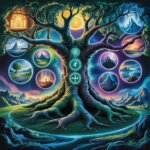
Yggdrasil, often described as an immense ash tree, is the axis mundi or cosmic axis, around which the Norse cosmological system is centered. The name ‘Yggdrasil’ intriguingly implies “Odin’s horse,” which stems from Odin’s self-sacrifice, where he hung from the tree to gain the wisdom of the runes. This immense structure is perpetually green, with leaves that never wilt, symbolizing the enduring vibrancy of nature.
The tree’s roots delve into various depths, connecting the different worlds and drawing up waters that sustain it. These waters, from the Well of Urd, are not only sustenance but also bear deep wisdom. Legends speak of creatures that dwell within Yggdrasil, including the dragon Nidhogg, which gnaws at its roots, seeking to topple the cosmic balance. The dichotomy of creation and destruction is a recurring theme in Norse myths, symbolized vividly in the life cycle of Yggdrasil.
The Configuration of the Nine Worlds
The Norse cosmos is partitioned into Nine Worlds, each stationed at a particular part of Yggdrasil. These worlds are home to gods, giants, humans, and other beings, each playing a role in the vast narrative of Norse mythology. Their arrangement and the relationships between these realms are pivotal to the mythological drama and beliefs in Norse culture.
1. Asgard
Home of the Aesir gods, Asgard is perhaps the most illustrious of the Nine Worlds. It is connected to Midgard, the world of humanity, via Bifrost, the rainbow bridge. Asgard houses magnificent palaces, including Valhalla and Sessrúmnir, final resting places for warriors chosen by Odin and Freya, respectively. These warriors aid the gods during Ragnarok, the end of the cosmos.
2. Midgard
Midgard, or the middle enclosure, is the realm of humans. Encircled by a great, impassable ocean, Midgard is connected to Asgard by Bifrost. In the center of Midgard lies the world tree (an earthly reflection of Yggdrasil), signifying life’s centrality and sacredness in human existence.
3. Vanaheim
The realm of the Vanir gods, known for their connection to fertility, wisdom, and the ability to see the future. Vanaheim and its inhabitants play crucial roles in Norse mythology, including the Aesir-Vanir war which ended in a truce conducive to cultural exchange and mutual enrichment among gods.
4. Jotunheim
The land of the giants or Jotnar, ancient beings often in conflict with the Aesir gods. Jotunheim is characterized by rugged mountains and dense forests, a stark, formidable landscape that mirrors the nature of its inhabitants.
5. Alfheim
Alfheim is the luminous home of the Light Elves, beings associated with beauty and fertility. Unlike their darker counterparts, the Light Elves are considered benevolent and helpful to gods and humans alike.
6. Svartalfheim
Also known as Nidavellir, this realm is the abode of the Dwarfs or Dark Elves. Masters of craftsmanship, the Dwarfs create some of the most potent and magical artifacts in Norse mythology, including Odin’s spear Gungnir, and Thor’s hammer, Mjolnir.
7. Niflheim
A primordial world of ice and mist, Niflheim is at the northern part of Yggdrasil. It is associated with darkness and cold, and within it lies Hvergelmir, the wellspring that feeds all rivers in the cosmos.
8. Muspelheim
A stark contrast to Niflheim, Muspelheim is a blazing hot realm to the south, home to fire giants and demons, and ruled by the fire giant Surtr. It is a place of chaos and destruction, playing a central role in Ragnarok when Surtr sets the worlds aflame.
9. Helheim
The realm of the dead, ruled over by the goddess Hel, a daughter of Loki. Helheim is a neutral place, unlike the Christian concept of Hell; it is simply a resting place for those who did not die a heroic or notable death.
Yggdrasil’s Role in Norse Mythology
Apart from supporting the structure of the universe, Yggdrasil acts as a meeting place for the gods, who assemble there to resolve disputes and govern the fate of the cosmos. The tree’s health is directly connected to the well-being of the universe, making its maintenance a vital task for the Norns, the fates of Norse mythology who reside by the Well of Urd.
Conclusion
Yggdrasil and the Nine Worlds encompass the breadth and complexity of Norse cosmology. Their interconnections and the legends surrounding them reflect a worldview where everything is woven together, with each component impacting the others. This cosmic framework not only influenced the spiritual and daily life of the Norse but also continues to captivate the imagination of modern readers and scholars, offering timeless insights into the interdependency of life and the universe.