Valkyries & Einherjar: Warriors of Norse Myth

Introduction to Valkyries and Einherjar
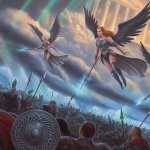
In the rich tapestry of Norse mythology, few figures captivate the imagination quite like the Valkyries and Einherjar. These beings emerge from the myths not merely as characters, but as powerful symbols of war, fate, and valor. The Valkyries, fierce and formidable maidens, serve Odin, the chief of the gods, with the task of selecting warriors who will die in battle and those who deserve a place in Valhalla. There, the chosen warriors, known as Einherjar, train for the coming of Ragnarok, the end-times battle.
The Role of Valkyries in Norse Mythology
The term ‘Valkyrie’ is derived from the Old Norse words valr (the slain) and kjósa or kyrja (to choose), essentially making them ‘choosers of the slain’. These deities of death and destiny are often depicted as riding into battle, clad in armor, deciding whom Odin will favor in combat. Their connection to ravens, often seen as omens of death, underscores their association with war and destiny. Valkyries not only convey the chosen warriors to Valhalla but also serve them mead and look after their needs in Odin’s hall.
Notable Valkyries in the Myths
Among the numerous Valkyries mentioned in the sagas and poems, names like Brünnhilde, Sigrdrífa, and Skuld frequently arise. Brünnhilde, one of the most famous Valkyries, takes a central role in the Völsunga saga and Richard Wagner’s Ring Cycle, showcasing the complexities and depth often attributed to these figures. They are portrayed not just as obedient servants of Odin but as beings with their personal stories, dilemmas, and even rebellions.
Understanding Einherjar: Odin’s Elite Warriors
The Einherjar, the chosen slain brought to Valhalla, are primarily warriors who died a noble death in battle, deemed worthy of continuing their existence in preparation for Ragnarok. These warriors spend their days fighting each other, honing their skills, and enjoying the nightly feasts provided by the boar Sæhrímnir, which is magically restored to life every evening.
Life in Valhalla
The life of an Einherjar is characterized not by posthumous rest, but by constant preparation for the future battles of Ragnarok where they will fight alongside the gods against giants and other adversaries. The literature also describes how these warriors are attended by Valkyries and feasted, a reflection of the Norse ideal of an honorable warrior’s afterlife where valor continues to define one’s existence.
Symbolism and Importance in Norse Culture
Both Valkyries and Einherjar reflect a central preoccupation with war within Norse culture. The Valkyries’ role as selectors of the slain can be seen as a form of divine intervention in human affairs, determining the outcomes of battles and the fates of warriors. This underscores a belief in predetermination and the significant influence of supernatural entities in life and death. The Einherjar, on the other hand, signify the ideal of continuing loyalty and valor beyond death, embodying the virtues of bravery and strength highly esteemed in Norse society.
Valkyries: Symbolic Bridges Between Life and Death
Valkyries also serve as a bridge between the mortal world and the divine, guiding the souls of warriors and serving as intermediaries. Their existence is pivotal for maintaining the cycle of fighting, death, and rebirth, which is central to Norse eschatology. In religious practices, they might have been invoked for protection in battle or for victory, underscoring their integral role in Norse spiritual life.
The Sources: Poetic and Prose Eddas
Our primary sources for information on Valkyries and Einherjar are the Poetic Edda and the Prose Edda, collections of Old Norse poems and tales compiled in the 13th century. The Hávamál (Sayings of the High One) and Grímnismál (The Song of the Hooded One) contain verses speaking directly about the conduct and fate of warriors, as well as the presence of Valkyries in battles.
Narrative and Mythological Contexts
The narratives surrounding Valkyries and Einherjar offer insights not only into Norse mythology but also into the societal structures of the time. These myths conveyed important cultural and societal norms, such as the honor of dying bravely in battle and the valued traits of loyalty and bravery. Moreover, they also reflect existential questions about fate, free will, and the afterlife, which remain relevant in literary and philosophical discourses.
Conclusion
Valkyries and Einherjar populate the world of Norse mythology as more than mere mythological figures. They are embodiments of war, death, valor, and fate, serving as both inspirations and cautionary tales about the virtues and perils of warrior life. Through their stories, we gain not only entertainment but also a profound understanding of the Norse worldview, where life continues in the shadow of an impending final battle, and honor outlasts death itself.